

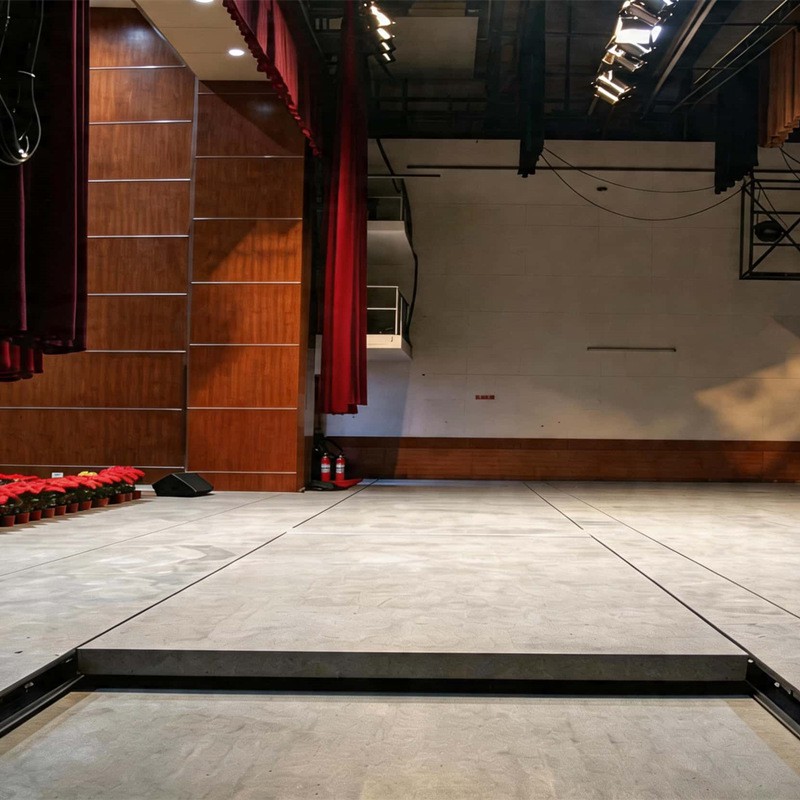
Product Overview
The Stage Wagon System is a professional stage machinery solution designed for horizontal movement beneath the stage. It travels back and forth along a predefined track, enabling rapid scene changes, transportation of scenery, props, and performers, and flexible expansion of the performance area.
The system can operate as an independent unit or work in coordination with multiple stage wagons to achieve synchronized or sequential movements. By transferring scenery and performers between the main stage, side stages, and backstage areas, it helps streamline stage transitions and improve operational efficiency.
Widely used in large theatres, musicals, variety shows, and cultural and tourism performances, the stage wagon system provides a flexible solution for dynamic stage layouts and creative performance scheduling.
Key Features
Smooth Horizontal Movement: Designed for stable back-and-forth travel along a predefined track, minimizing jolts and vibration.
Precise Positioning: Supports accurate stopping at designated positions for reliable scene alignment.
Robust Structural Design: Provides structural rigidity and load-bearing capacity according to the specified operating requirements.
Low-Noise Operation: Helps minimize mechanical noise that could interfere with performance sound pickup and the audience experience.
Flush Stage Alignment: The wagon platform can be designed to align with the main stage surface at designated positions.
Multiple Safety Protections: Can incorporate travel limit switches, collision prevention, pinch protection, overload protection, emergency stop, and power-failure self-locking.
Independent Operation: Individual wagons can be operated independently according to the system design.
Multi-Wagon Coordination: Multiple units can operate in a coordinated sequence or simultaneously.
Preset Operating Programs: Supports preset movement sequences for repeatable stage transitions.
System Integration: Can be integrated with the stage control system, lifting platforms, and revolving stages.
Typical Applications
Large Theatres
Transfers scenery, stage props, and performers between the main stage and backstage areas to support efficient scene changes.
Musicals and Drama Productions
Enables coordinated movement of stage sets and performance platforms, helping create continuous transitions between scenes.
Variety Shows and Television Productions
Supports flexible stage arrangements and rapid changes between different program settings.
Cultural and Tourism Performances
Enables dynamic stage scheduling and coordinated movements for large-scale performances and immersive productions.
Multi-Functional Performance Venues
Allows different stage configurations to be arranged according to the requirements of individual performances.
System Configuration
The stage wagon system can be configured according to the venue layout, required travel distance, rated load, and control requirements.
Depending on the project design, the system may include:
Stage Wagon Platform: The moving platform used to transport scenery, props, performers, or other designated loads.
Steel Supporting Structure: Provides the structural support and rigidity required for the specified load.
Track System: Defines the horizontal travel path between designated stage positions.
Drive Mechanism: Provides the force required for controlled horizontal movement.
Positioning and Control System: Controls travel direction, movement sequences, and stopping positions.
Safety Protection Devices: May include limit switches, collision prevention, pinch protection, overload protection, emergency stop, and power-failure self-locking.
Stage Control Integration: Enables coordinated operation with other stage machinery, including lifting platforms and revolving stages.
The final configuration should be determined according to the project drawings, installation conditions, movement requirements, and intended operating procedures.
Safety Design
Safety is an essential consideration in the design and operation of stage wagon systems. The system can incorporate multiple protective functions to support controlled movement and reduce operational risks.
Travel Limit Protection: Helps prevent the wagon from travelling beyond its defined operating range.
Collision Prevention: Can be configured to reduce the risk of collisions with surrounding structures, equipment, or other moving units.
Pinch Protection: Helps address potential trapping hazards in moving areas and interfaces.
Overload Protection: Helps protect the drive system when the operating load exceeds the configured limit.
Emergency Stop: Allows operators to stop the system when necessary.
Power-Failure Self-Locking: Can help prevent unintended movement following a power interruption, depending on the selected mechanical design.
Stable Structural Support: Designed to carry the specified load within the system's rated capacity.
Positioning Control: Supports accurate stopping at designated positions to help maintain alignment with the main stage.
Coordinated Operation: Multi-wagon movement sequences can be configured according to the project design and operating procedures.
The final safety arrangement should be confirmed through engineering design and assessed against applicable requirements and the venue's operating procedures.
Performance and Operational Advantages
Efficient Horizontal Transportation
The stage wagon system transfers scenery, props, and performers between designated stage areas, helping streamline stage operations.
Faster Scene Changes
By moving stage sets and platforms mechanically, the system can reduce the time required for manual scene rearrangement.
Accurate Stage Alignment
Controlled positioning helps the wagon platform align with the main stage surface at designated locations.
Flexible Multi-Wagon Operation
Multiple wagons can operate simultaneously or sequentially, supporting complex scene transitions and flexible stage scheduling.
Creative Performance Effects
Stage wagons can participate directly in performance sequences, enabling moving entrances, dynamic scene transitions, and other visual effects.
Coordinated Stage Machinery
Integration with lifting platforms and revolving stages can support combined horizontal, vertical, and rotational movements.
Reduced Operational Noise
Low-noise operation helps minimize interference with the sound environment of live performances.
Customized Solutions
Each performance venue has different stage dimensions, travel paths, load requirements, and scene-changing procedures. The stage wagon system can be configured to suit the specific project.
Customization options may include:
Wagon Dimensions: Platform length, width, and overall configuration.
Travel Distance: Horizontal movement range based on the stage layout.
Rated Load: Determined according to the weight of scenery, props, performers, and other designated loads.
Track Layout: Designed according to the main stage, side stage, and backstage arrangement.
Positioning Requirements: Configured for the required stopping positions and alignment accuracy.
Control Functions: Independent operation, multi-wagon coordination, and preset movement sequences.
Safety Configuration: Selection of appropriate travel limits, collision prevention, pinch protection, overload protection, and other protective functions.
System Integration: Coordination with the stage control system, lifting platforms, and revolving stages.
For an accurate technical proposal, please provide the stage layout or engineering drawings, required travel distance, wagon dimensions, rated load, track arrangement, platform height, control requirements, and intended coordination with other stage machinery.
Frequently Asked Questions
Q1: What is a stage wagon system?
A stage wagon system is a mechanical platform system that moves horizontally along a predefined track to transport scenery, props, performers, or designated loads between stage positions.
Q2: What is the main purpose of a stage wagon?
Its main purpose is to facilitate scene changes, transport stage equipment and scenery, and provide flexible movement between the main stage and other stage areas.
Q3: Can multiple stage wagons operate together?
Yes. The system can be configured for coordinated operation of multiple units, either simultaneously or sequentially, depending on the control design.
Q4: Can the wagon platform align with the main stage?
The platform can be designed to align with the main stage surface at designated positions. The final height, interfaces, and gaps should be determined during engineering design.
Q5: Can the stage wagon system be integrated with other stage machinery?
Yes. It can be integrated with the stage control system, lifting platforms, and revolving stages to support coordinated mechanical movements.
Q6: What safety protections can be included?
Depending on the project design, the system can include travel limit switches, collision prevention, pinch protection, overload protection, emergency stop, and power-failure self-locking.
Q7: What information is required for a quotation?
Please provide the stage drawings, track layout, required travel distance, wagon dimensions, rated load, platform height, control requirements, and any required coordination with other stage machinery.
Hot Tags: stage wagon system, China stage wagon system manufacturers, suppliers, factory, LED Screen Frame, Lift Screen Frame, Single Point Hoist Stage, Horizontal Winding Curtain Machinery, Orchestra Pit Lift, Bi Parting Mechanism