


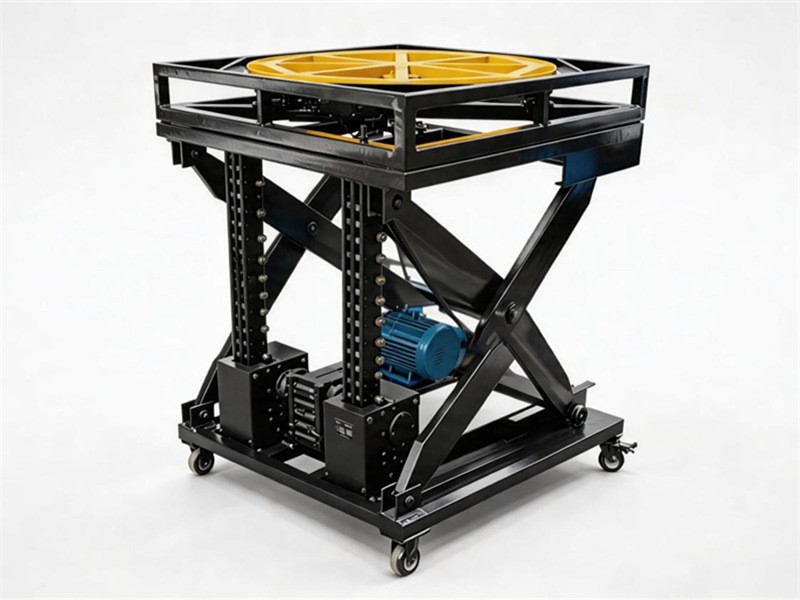
The Lifting and Rotating Stage is a professional stage machinery system installed beneath the stage, integrating vertical lifting and 360° rotation in a single unit. Designed for dynamic stage performances and scene transformations, it enables performers, scenery, and props to rise from below the stage, rotate smoothly, and create striking visual effects.
The system supports independent or synchronized lifting and rotating movements, providing flexible motion control for a wide range of stage applications. It is suitable for dramas, operas, concerts, variety shows, cultural tourism performances, and other entertainment venues requiring dynamic stage presentation.
With a sturdy steel structure, variable-frequency speed control, precise positioning, and multiple optional safety protections, the Lifting and Rotating Stage offers a versatile solution for modern stage design.
Key Features
Smooth and Stable Lifting
Designed for stable vertical movement with precise guidance, helping minimize shaking, tilting, and abnormal operating noise.
360° Forward and Reverse Rotation
Supports smooth rotation in both directions, with the ability to stop at preset positions and angles according to the control configuration.
Independent or Synchronized Operation
The lifting and rotating functions can operate separately or simultaneously, enabling a wide range of stage movement combinations.
Robust Steel Structure
A sturdy steel structure is designed to meet the specified rated-load requirements and provide resistance to deformation during operation.
Variable-Frequency Speed Control
Variable-frequency control enables stepless speed adjustment and supports precise positioning according to the system configuration.
Multiple Safety Protection Options
Safety functions can include travel limiting, fall prevention, overload protection, emergency stop, and power-loss protection, subject to the final design.
Integrated Stage Control
The system can be connected to the main stage control system to support coordinated operation with other stage equipment.
Product Description
The Lifting and Rotating Stage combines two essential stage movements: vertical lifting and horizontal rotation. Installed beneath the stage surface, it allows performers, scenery, or props to be raised into view, lowered out of sight, or rotated to achieve different presentation angles.
The lifting mechanism is designed for smooth vertical movement and accurate guidance. The rotating mechanism supports forward and reverse rotation, uniform-speed operation, and stopping at preset positions. These functions enable stage designers to create layered performances, dramatic entrances, rapid scene changes, and immersive visual presentations.
The lifting and rotating functions can operate independently or in coordination, allowing flexible movement sequences according to the performance requirements. The system can also be integrated with the main stage control system for coordinated operation with other stage machinery.
Typical Applications
The Lifting and Rotating Stage is suitable for performance venues and productions that require dynamic stage movement.
Typical applications include:
Theaters and performing arts centers
Opera houses and drama theaters
Concerts and live entertainment
Variety shows and television productions
Cultural tourism performances
Stage entrances and exits for performers
Prop and scenery lifting
Rapid scene changes
Center-stage displays and rotating presentations
Immersive and theatrical special effects
System Configuration
The Lifting and Rotating Stage can be configured according to the venue layout, required movement, load conditions, and control requirements.
Typical system elements and options include:
Lifting Mechanism: Provides vertical movement through the specified lifting stroke.
Rotating Mechanism: Enables 360° rotation, forward and reverse movement, and preset-angle positioning.
Steel Supporting Structure: Designed according to the required load and installation conditions.
Drive System: Electric servo or hydraulic drive options are available.
Speed and Position Control: Variable-frequency speed regulation and positioning functions, according to the selected control system.
Control System Integration: Connection with the main stage control system for coordinated operation.
Stage Top Surface: Optional anti-slip finish and customized surface treatment.
Enclosure and Finish: Optional flame-retardant finish and decorative enclosure, according to project requirements.
Safety Protection: Configurable protection functions based on the final engineering design.
The final configuration should be confirmed after reviewing the stage drawings, load requirements, available installation space, required movement, and applicable safety standards.
Technical Specifications
|
Item |
Description |
|
Product Name |
Lifting and Rotating Stage |
|
Product Type |
Integrated Stage Lifting and Rotating System |
|
Installation Position |
Beneath the stage |
|
Lifting Function |
Vertical lifting and lowering |
|
Rotating Function |
360° rotation |
|
Rotation Direction |
Forward and reverse |
|
Operating Modes |
Independent or synchronized lifting and rotation |
|
Speed Control |
Variable-frequency stepless speed control |
|
Positioning |
Preset-height and preset-angle positioning, subject to system configuration |
|
Structural Material |
Steel structure |
|
Drive Options |
Electric servo or hydraulic |
|
Control Integration |
Compatible with the main stage control system, subject to interface requirements |
|
Tabletop Shapes |
Circular, square, or special-shaped |
|
Lifting Stroke |
Customized according to project requirements |
|
Rated Load |
Customized according to project requirements |
|
Rotation Speed |
Customized according to project requirements |
|
Safety Options |
Travel limiting, fall prevention, overload protection, emergency stop, and power-loss protection |
|
Surface Options |
Anti-slip tabletop and customized finish |
|
Application |
Theaters, concerts, variety shows, and cultural tourism performances |
Lifting and Rotating Performance
1 Vertical Lifting
The platform can stop and remain at different heights within its designed lifting range, subject to the system configuration. Performers, scenery, or props can rise from beneath the stage to the stage surface or descend out of sight.
This function supports layered stage presentations, concealed waiting positions, dramatic entrances, and rapid scene transitions.
2 360° Rotation
The rotating platform supports forward and reverse rotation, uniform-speed movement, and stopping at preset angles according to the control configuration.
Rotational movement enables surround-style displays, focused center-stage presentations, and panoramic performance effects.
3 Combined Lifting and Rotation
The lifting and rotating functions can operate simultaneously to create coordinated movement sequences. As the platform rises or descends, it can also rotate, producing visual effects such as floating appearances, dynamic reveals, and spatial transformations.
4 Flexible Movement Control
Independent and synchronized operating modes provide flexibility for different performance sequences. When integrated with the main stage control system, the platform can be coordinated with other stage machinery according to the approved control design.
Customized Solutions
Each performance venue has different spatial conditions, load requirements, and creative objectives. The Lifting and Rotating Stage can be customized to suit the specific project.
Available customization options include:
Tabletop Shape and Size: Circular, square, or special-shaped platforms.
Lifting Stroke: Customized according to the required vertical travel.
Rated Load: Designed according to the specified working load and project conditions.
Rotation Parameters: Rotation speed, direction, and positioning angle.
Drive System: Electric servo or hydraulic options.
Tabletop Finish: Anti-slip surface options.
Appearance and Enclosure: Customized decorative finishes and enclosure designs.
Safety Protection: Optional travel limiting, fall prevention, overload protection, emergency stop, and power-loss protection.
Control Integration: Coordination with the main stage control system, subject to technical evaluation.
To develop a suitable solution, please provide the platform shape and dimensions, required lifting stroke, rated load, rotation speed, preferred drive method, installation drawings, and control-system requirements.
Why Choose Our Lifting and Rotating Stage?
Two Functions in One System
Integrates vertical lifting and 360° rotation to support a broad range of stage movements and presentation effects.
Flexible Motion Combinations
Allows lifting and rotation to operate independently or together, providing greater flexibility for performance design.
Configurable Safety Protection
Multiple safety protection functions can be incorporated according to the application and final engineering design.
Precise Movement Control
Variable-frequency speed regulation and positioning functions support controlled movement according to the system configuration.
Customizable Engineering Design
Platform shape, dimensions, lifting stroke, rated load, rotation parameters, and drive options can be tailored to project requirements.
Integration with Stage Machinery
Can be connected to the main stage control system to support coordinated operation with other stage equipment.
FAQ
Q: What is a Lifting and Rotating Stage?
A: It is a stage machinery system installed beneath the stage that combines vertical lifting and 360° rotation. It is used for performer entrances and exits, prop lifting, scene changes, and special stage effects.
Q: Can lifting and rotation operate independently?
A: Yes. The lifting and rotating functions can operate independently or in a synchronized mode, depending on the control configuration.
Q: Can the platform rotate in both directions?
A: Yes. Forward and reverse rotation are supported. Preset-angle stopping can also be configured according to the control system.
Q: Can the platform stop at an intermediate height?
A: The system can be designed to stop and remain at different heights within its specified lifting range. The available stopping and holding functions should be confirmed during engineering design.
Q: What drive systems are available?
A: The source document identifies electric servo and hydraulic drive options. The appropriate solution depends on the load, movement requirements, installation conditions, and control design.
Q: Can the platform shape and dimensions be customized?
A: Yes. Circular, square, and special-shaped tabletops are available as customization options. Dimensions are determined according to the project requirements.
Q: What safety protection functions are available?
A: Options can include travel limiting, fall prevention, overload protection, emergency stop, and power-loss protection. The final safety configuration depends on the system design and applicable requirements.
Q: Can the system work with other stage machinery?
A: Yes. The system can be integrated with the main stage control system, subject to compatibility and interface evaluation
Quality, Engineering and After-Sales Support
A reliable lifting and rotating stage solution begins with a clear understanding of the venue and performance requirements.
Project support can include:
Review of project drawings and installation conditions
Confirmation of platform dimensions, lifting stroke, and rated load
Selection of drive and control options
Coordination of lifting, rotating, and synchronized operating modes
Evaluation of safety protection requirements
Assessment of integration with existing stage machinery
Technical documentation and delivery coordination
Technical communication regarding installation and system operation
The final design, technical specifications, safety functions, and scope of support will be confirmed according to the project requirements and agreement.
Hot Tags: lifting and rotating stage, China lifting and rotating stage manufacturers, suppliers, factory, LED Screen Frame, Lift Screen Frame, Single Point Hoist Stage, Horizontal Winding Curtain Machinery, Orchestra Pit Lift, Bi Parting Mechanism