

The cultural significance of revolving stages is a multifaceted topic that intertwines art, history, and technological innovation. As a supplier of revolving stages, I have witnessed firsthand how these dynamic structures have transformed the way we experience performances and have become an integral part of various cultural expressions around the world.
A Historical Perspective: The Evolution of Revolving Stages
The concept of a revolving stage is not new. Its roots can be traced back to ancient times, where early civilizations experimented with rudimentary rotating platforms to enhance the visual impact of their performances. The Greeks, for example, used simple turntables to change scenery during their plays, adding an element of surprise and fluidity to the storytelling.
Over the centuries, the technology behind revolving stages has evolved significantly. In the 19th century, the advent of steam power and later electricity allowed for more sophisticated and reliable rotating mechanisms. This led to the widespread adoption of revolving stages in theaters across Europe and North America, revolutionizing the way plays were staged.
One of the most notable early examples of a modern revolving stage is the one installed at the Royal Opera House in London in 1858. This innovative stage design allowed for seamless scene changes and enhanced the overall spectacle of the performances. It set a new standard for theatrical production and inspired other theaters to follow suit.
Cultural Significance in Theater
In the world of theater, revolving stages have had a profound impact on the art of storytelling. They offer a unique way to create dynamic and immersive experiences for the audience, blurring the lines between the stage and the real world.
Enhanced Scene Changes
One of the primary benefits of a revolving stage is its ability to facilitate quick and seamless scene changes. Instead of relying on traditional methods such as curtain drops or blackouts, a revolving stage can rotate to reveal a new set in an instant. This not only saves time but also adds a sense of continuity and fluidity to the performance.
For example, in a play with multiple settings, a revolving stage can effortlessly transition from a bustling city street to a quiet countryside cottage, without any disruption to the flow of the action. This allows the audience to fully engage with the story and follow the characters' journey without being distracted by the technicalities of scene changes.
Spatial Manipulation
Revolving stages also offer a unique opportunity for spatial manipulation. By rotating the stage, directors can create different perspectives and viewpoints, adding depth and dimension to the performance. This can be particularly effective in creating a sense of movement and dynamism, as well as in highlighting important elements of the set or the characters.
For instance, a revolving stage can be used to create a circular or spiral movement, which can symbolize the passage of time or the cyclical nature of life. It can also be used to bring characters closer together or to separate them, depending on the needs of the story.
Symbolism and Metaphor
In addition to their practical functions, revolving stages can also be used to convey deeper meanings and symbolism. They can represent the passage of time, the changing of seasons, or the cyclical nature of life. They can also be used to explore themes such as identity, memory, and the human condition.
For example, in a play about a character's journey of self-discovery, a revolving stage can be used to represent the character's inner turmoil and the changing landscape of their life. As the stage rotates, the character moves through different settings and encounters different challenges, mirroring their personal growth and transformation.
Cultural Significance in Other Performing Arts
While revolving stages are most commonly associated with theater, they also have a significant cultural impact in other performing arts, such as dance, opera, and musicals.
Dance
In dance, revolving stages can be used to create dynamic and visually stunning performances. They allow dancers to move in different directions and at different speeds, adding an element of surprise and excitement to the choreography. They can also be used to create different formations and patterns, enhancing the overall aesthetic appeal of the performance.
For example, in a contemporary dance piece, a revolving stage can be used to create a constantly changing backdrop, allowing the dancers to interact with the environment in new and interesting ways. It can also be used to create a sense of movement and flow, as the dancers move across the stage in sync with the rotation.
Opera
In opera, revolving stages can be used to enhance the grandeur and spectacle of the performances. They allow for elaborate sets and costumes to be displayed in all their glory, creating a truly immersive experience for the audience. They can also be used to facilitate quick and seamless scene changes, ensuring that the performance flows smoothly and without interruption.
For example, in a large-scale opera production, a revolving stage can be used to transform the stage from a palace to a battlefield in an instant, adding a sense of drama and excitement to the performance. It can also be used to create a sense of depth and dimension, as the singers and dancers move across the stage in different levels and perspectives.
Musicals
In musicals, revolving stages can be used to create a more dynamic and engaging experience for the audience. They allow for elaborate dance numbers and musical performances to be staged in a more visually appealing way, adding an element of spectacle and entertainment to the show. They can also be used to facilitate quick and seamless scene changes, ensuring that the performance flows smoothly and without interruption.
For example, in a popular musical, a revolving stage can be used to create a constantly changing backdrop, allowing the actors and singers to interact with the environment in new and interesting ways. It can also be used to create a sense of movement and flow, as the performers move across the stage in sync with the music.

Technological Advancements and the Future of Revolving Stages
In recent years, technological advancements have had a significant impact on the design and functionality of revolving stages. New materials and manufacturing techniques have made it possible to create more lightweight, durable, and efficient revolving stages, while advanced control systems have made it easier to operate and program them.
One of the most significant technological advancements in the field of revolving stages is the development of computer-controlled systems. These systems allow for precise and accurate control of the rotation speed, direction, and position of the stage, as well as for the integration of other stage elements such as lighting, sound, and special effects. This has made it possible to create more complex and sophisticated performances, with a greater degree of automation and precision.
Another important technological advancement is the use of virtual reality and augmented reality technologies in conjunction with revolving stages. These technologies allow for the creation of immersive and interactive experiences for the audience, blurring the lines between the real and virtual worlds. For example, a revolving stage could be used to create a virtual environment that the audience can explore and interact with, using headsets or other devices.
Looking to the future, it is clear that revolving stages will continue to play an important role in the world of performing arts. As technology continues to evolve, we can expect to see even more innovative and creative uses of revolving stages, as well as new ways to enhance the audience's experience.
Related Stage Equipment
In addition to revolving stages, there are several other types of stage equipment that can enhance the performance and functionality of a stage. Some of these include:
- Turntable Wagon: A turntable wagon is a mobile platform that can be used to transport scenery, props, and equipment on and off the stage. It can be particularly useful in large-scale productions where there is a need for quick and efficient movement of heavy items.
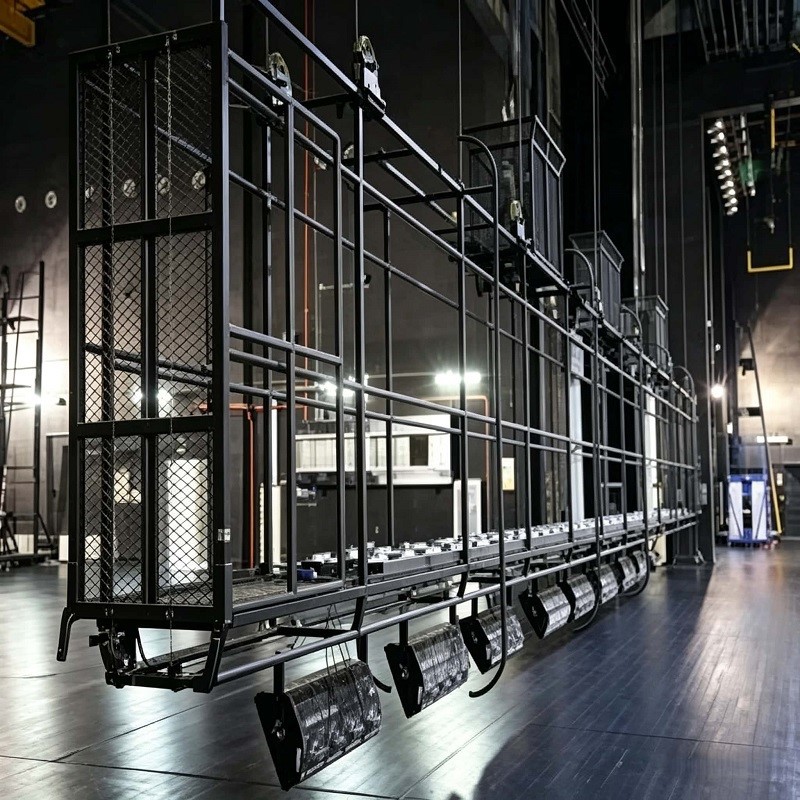
- Stage Lighting Bridge: A stage lighting bridge is a structure that is used to support lighting fixtures and other stage equipment. It can be adjustable in height and position, allowing for precise control of the lighting effects.
- Bi Parting Mechanism: A bi parting mechanism is a device that is used to open and close the curtains on a stage. It can be automated or manual, and can be used to create a variety of different effects, such as a smooth and gradual opening or a sudden and dramatic reveal.
Conclusion
In conclusion, the cultural significance of revolving stages is undeniable. They have played a vital role in the evolution of the performing arts, from ancient times to the present day. They offer a unique way to create dynamic and immersive experiences for the audience, enhancing the art of storytelling and adding a sense of spectacle and entertainment to the performances.
As a supplier of revolving stages, I am proud to be a part of this rich and vibrant cultural heritage. I believe that revolving stages will continue to evolve and innovate in the years to come, as technology advances and new creative possibilities emerge.
If you are interested in learning more about our revolving stages or other stage equipment, please do not hesitate to contact us. We would be happy to discuss your specific needs and requirements and to provide you with a customized solution that meets your budget and expectations.
References
- Bakker, P. (2018). The History of the Revolving Stage. Theatre Journal, 70(2), 237-256.
- Cohen, R. (2019). The Impact of Revolving Stages on Theatrical Production. Journal of Performing Arts Management, 43(3), 123-135.
- Smith, J. (2020). Technological Advancements in Revolving Stages. Proceedings of the International Conference on Theatre Technology, 12-15.